Please note: This article covers Flexible Printed Circuits for electronics and hardware design. It does not cover the Fundamental Payroll Certification used in human resources.
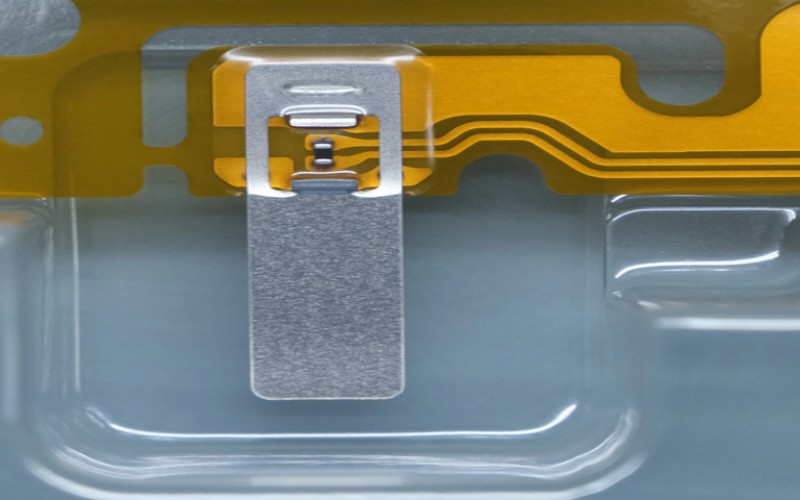
An FPC is a highly reliable, bendable printed circuit board. Engineers design it to replace traditional wire harnesses and rigid boards in extremely compact environments. You will find these circuits offer unparalleled spatial efficiency inside modern devices. However, selecting the right layer count, material stack-up, and connector type remains a complex challenge. You must balance upfront tooling costs against mechanical longevity, specifically regarding dynamic bend cycles.
This guide provides engineers and procurement managers with a clear evaluation framework. We will help you specify flexible printed circuit boards accurately for your next project. You will learn how to compare them against alternatives like Flat Flexible Cables (FFCs). Finally, we will help you anticipate common integration risks before finalizing your design architecture.
Key Takeaways
Material Baseline: FPCs utilize a polyimide base and copper traces, allowing for dynamic bending without compromising conductive pathways.
Structural Versatility: Unlike straight-line FFCs, flexible printed circuit boards support multi-layer designs, crossed routing, impedance control, and direct Surface Mount Device (SMD) integration.
Industry Standardization: FPCs are graded by IPC standards (Types 1–4), dictating layer counts and rigid-flex combinations for specific durability requirements.
Implementation Reality: Higher tooling costs mean FPCs are best suited for high-volume production or spatial-constrained applications (e.g., wearables, robotics) where standard rigid boards fail.
The Anatomy of Flexible Printed Circuit Boards
To evaluate flexible circuits effectively, you must first understand their core physical components. We avoid marketing jargon here and focus strictly on the thermal and mechanical properties driving your design choices.
Material Stack-Up
An FPC relies on three primary layers. First, the dielectric substrate forms the foundation. Manufacturers overwhelmingly use polyimide for this layer. Polyimide provides exceptional thermal stability, allowing the circuit to survive reflow soldering temperatures. Second, conductive copper traces carry the electrical signals. For dynamic bending, engineers specify rolled annealed (RA) copper. RA copper features elongated grain structures, preventing premature fatigue. Finally, a coverlay acts as the protective outer jacket. It functions similarly to a solder mask on a rigid board but utilizes flexible adhesives to prevent cracking.
Manufacturing Capability
Standard ribbon cables force signals along straight, parallel paths. Flexible printed circuits break this limitation entirely. They support highly complex routing architectures. You can design traces that cross over one another using multiple layers. Furthermore, manufacturers can cut the substrate into intricate custom geometries. You can specify angles, branches, and irregular shapes. This flexibility allows the circuit to navigate through convoluted 3D enclosures, such as camera lenses or robotic hinges.
SMD Compatibility
One of the strongest advantages of these circuits is their component compatibility. You can mount electronic components directly onto the flex circuit. This process integrates Surface Mount Devices (SMD) seamlessly. By placing active chips, resistors, and capacitors directly on the bendable substrate, you eliminate the need for secondary rigid boards. This direct integration dramatically reduces the overall weight and spatial footprint of your hardware.
IPC Classifications: Specifying the Right FPC Type
The electronics industry relies on the IPC-2223 standard to categorize flexible circuits. Understanding these four classifications helps you specify the correct durability level for your application.
Type 1 (Single-Sided)
Type 1 designs feature a single conductive copper layer resting on a polyimide film. Manufacturers usually apply an insulating coverlay on top. This configuration provides the highest possible flexibility. It also carries the lowest manufacturing cost. You should specify Type 1 for extreme dynamic applications. A properly designed Type 1 circuit can survive millions of bend cycles inside mechanical hinges or printer heads.
Type 2 (Double-Sided)
Type 2 circuits incorporate two conductive layers. Manufacturers connect these layers using plated through-holes (PTH). You gain a significant advantage in routing density here. You can run traces on both sides of the substrate to miniaturize the footprint. However, you must accept a mechanical trade-off. The added copper and via plating increase the overall stiffness. Type 2 circuits exhibit a slightly reduced bend radius compared to Type 1.
Type 3 (Multilayer FPC)
Type 3 designs contain three or more conductive layers connected by plated through-holes. Engineers specify these primarily for complex signal routing. If your design requires strict impedance control for high-speed LVDS data lines, you often need a Type 3 stack-up. You must note a crucial limitation. The sheer thickness of multiple laminated layers severely limits dynamic flexibility. You should use Type 3 strictly for static "install-once" bending applications.
Type 4 (Rigid-Flex)
Type 4 combines standard rigid FR4 boards and flexible substrates into a single interconnected unit. Manufacturers laminate the flexible layers directly inside the rigid boards. This eliminates the need for bulky board-to-board connectors. We frame Type 4 as the highest reliability solution available. It excels in extreme vibration environments. You will frequently see rigid-flex designs deployed in aerospace avionics, military hardware, and heavy industrial robotics.
IPC Classification
Layer Count
Primary Advantage
Flexibility Level
Type 1
Single layer
Highest bend lifespan, lowest cost
Maximum (Dynamic)
Type 2
Double layer (with PTH)
High routing density in small areas
Moderate (Semi-Dynamic)
Type 3
Three or more layers
Impedance control, dense routing
Low (Static/Install-Once)
Type 4
Rigid and Flex combined
Ultimate vibration resistance
Varies by flex region
Evaluating Alternatives: FPC vs. FFC (Flat Flexible Cables)
Hardware procurement teams frequently confuseflexible printed circuit boardswith Flat Flexible Cables (FFCs). While both transmit signals between moving parts, they serve entirely different architectural needs. You must understand their physical limitations to make cost-effective decisions.
Physical Limitations
An FFC consists of straight, parallel copper conductors laminated between two layers of plastic film. It functions purely as a straight-line bridge. You can only route signals in a 1-to-1 or 1-to-N parallel configuration. Conversely, flexible printed circuits allow entirely customizable routing. You can cross traces, alter track widths, and create complex interconnected webs.
Shape Constraints
Manufacturing dictates the shape of these components. FFCs are extruded continuously. Therefore, they are almost exclusively rectangular strips. They cannot maneuver around physical obstacles. FPCs, however, are etched and cut. You can specify a custom-cut shape to navigate around battery packs, screws, and complex 3D enclosure features.
Signal Integrity
Signal integrity clearly separates the two technologies. You can design an FPC to handle strict impedance-controlled data transmission. By utilizing reference ground planes and specific dielectric thicknesses, they easily carry high-speed signals. Standard FFCs generally lack this precision. Engineers usually limit FFCs to basic signal jumping and low-speed data transit.
Decision Matrix Chart
We recommend using the following chart to summarize your procurement decision matrix.
Evaluation Criteria
Flat Flexible Cables (FFC)
Flexible Printed Circuits (FPC)
Routing Capabilities
Parallel only (Straight lines)
Customizable, multi-layer crossing
Shape Customization
Rectangular strips only
Custom angles, folds, irregular shapes
Component Mounting
Not supported natively
Full SMD compatibility
Signal Integrity
Basic signal transmission
High-speed impedance control
Ideal Use Case
Simple LCD/motherboard bridging
Wearables, 3D enclosures, robotics
Implementation Constraints and Risk Mitigation
Integrating flexible circuits carries unique mechanical and financial risks. You must proactively mitigate these constraints during the early prototyping phase to avoid catastrophic field failures.
The Minimum Bend Radius (MBR)
The Minimum Bend Radius dictates how tightly you can fold the circuit before causing permanent damage. You must explicitly warn your mechanical engineers against designing sharp, origami-style creases. Exceeding the MBR causes the copper traces to undergo extreme tension and compression. This leads directly to micro-cracking and material delamination. Best practice requires placing delicate traces squarely on the neutral axis. The neutral axis represents the theoretical center layer of the stack-up where tension and compression forces cancel each other out.
Tooling and NRE Costs
You must evaluate Non-Recurring Engineering (NRE) costs transparently. Manufacturing a custom FPC requires bespoke tooling. Fabrication houses must create custom steel-rule dies, electrical testing fixtures, and laser-cutting profiles. These initial setup fees make low-volume prototyping significantly more expensive compared to buying off-the-shelf FFCs. We recommend utilizing these custom circuits only when spatial constraints absolutely mandate them, or when high-volume production eventually dilutes the initial NRE burden.
Environmental Resilience
Polyimide absorbs water. It possesses a notably high moisture absorption rate compared to standard rigid FR4 materials. You must factor this into your assembly process. We strongly advise implementing pre-baking requirements before you pass the circuits through reflow soldering. If you fail to bake out the trapped moisture, the sudden intense heat turns the water into steam. This expanding steam blasts the layers apart. The industry refers to this destructive delamination phenomenon as "popcorning."
A flexible circuit only performs as reliably as its connection to the main motherboard. Selecting the correct connector dictates your final assembly efficiency and long-term vibration resistance.
Connector Compatibility
Engineers typically interface these circuits with main PCBs using either ZIF (Zero Insertion Force) or LIF (Low Insertion Force) connectors. ZIF connectors feature a mechanical latch. You open the latch, drop the cable in without resistance, and snap the latch closed. LIF connectors rely purely on friction. You push the cable into the socket, and tight contacts hold it in place. ZIF connectors cost slightly more but prevent trace abrasion during insertion.
Retention Mechanisms
In high-vibration environments, standard latches can fail. You should evaluate connectors featuring Rotary Backlock mechanisms. Unlike standard front-flip latches, a rotary backlock sits at the rear of the connector. If the cable experiences an accidental upward pull, the mechanics actually force the contacts tighter against the circuit. This mechanism effectively prevents accidental cable release under severe industrial vibration.
Assembly Efficiency
Assembly line errors cost money. Human operators frequently insert cables upside down, causing immediate test failures. You can mitigate this entirely by specifying dual-contact connectors. These connectors feature electrical contacts on both the top and bottom of the inner socket. They eliminate the need for operators to identify the conductive side of the cable. This simple feature drastically reduces assembly errors and speeds up overall cycle times.
Conclusion
Adopting flexible circuits transforms the way you approach product design. You unlock new possibilities in miniaturization and weight reduction. However, successful integration demands rigorous upfront planning.
Summary of Evaluation: You can justify FPC adoption when critical constraints in space, weight, and dynamic movement outweigh the initial NRE costs. They solve problems standard rigid boards cannot.
Shortlisting Logic: Before requesting quotes from fabrication houses, finalize your mechanical and electrical baselines. Determine whether your design requires dynamic continuous bending or a simple static fold. Map out your precise impedance control requirements first.
Next Steps: We encourage engineering teams to consult the IPC-2223 design guidelines directly. Next, request physical material stack-up samples from shortlisted manufacturing partners to test real-world flexibility limits.
FAQ
Q: What does "Pitch" mean in FPCs?
A: Pitch refers to the measured distance from the center of one conductive trace to the center of the adjacent trace. Manufacturers commonly standardize pitch at 0.5mm, 1.0mm, or 1.25mm. You must accurately match the pitch of your circuit to the corresponding PCB connector to ensure electrical compatibility.
Q: Can flexible printed circuit boards be shielded against EMI?
A: Yes. Manufacturers can apply shielding to mitigate Electromagnetic Interference (EMI). They typically integrate printed silver ink, laminated shielding films, or internal copper mesh layers. While these add robust protection against signal noise, you must account for the resulting increase in material thickness and stiffness.
Q: How long do FPCs last in dynamic bending applications?
A: Lifespan depends entirely on the design's bend radius and material thickness. A properly engineered dynamic circuit—specifically a Type 1 utilizing rolled annealed (RA) copper—can successfully withstand millions of continuous flex cycles. However, standard designs using incorrect copper types or excessive layers will fail much sooner.