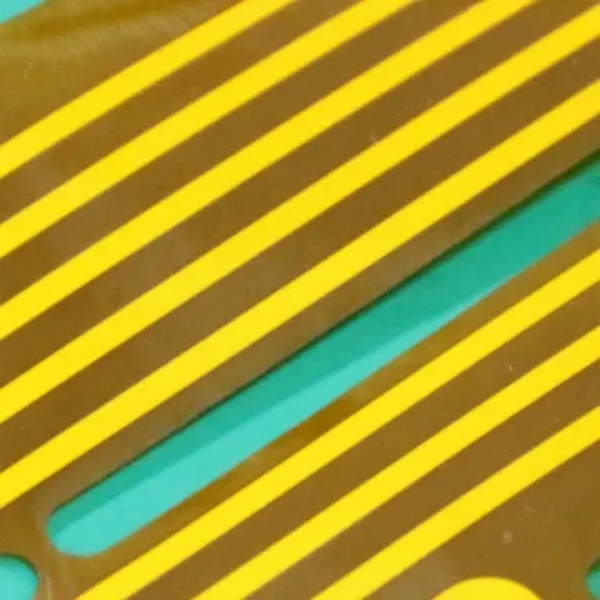
Transitioning a conceptual design into a highly reliable, mass-manufactured flexible circuit board requires stringent material selection and DFM alignment. Rapid in-house prototyping using chemical etching on copper-clad Kapton serves early proof-of-concept needs perfectly. However, commercial deployment introduces strict new constraints. You must ensure predictable impedance, mechanical stress mitigation, and full IPC compliance. Without these rigorous controls, prototypes inevitably fail under real-world dynamic bending. Engineering teams often underestimate the gap between a benchtop prototype and a factory-yielded product. This guide provides engineering and procurement teams an evidence-based framework. We will explore how to design, evaluate, and manufacture these components efficiently. You will learn to navigate complex material chemistry, routing physics, and vendor validation. Mastering these elements allows you to scale production successfully and avoid costly redesigns.
Key Takeaways
Material Constraints: Polyimide (PI) is mandatory for high-temperature and dynamic bending, whereas PET is strictly for low-cost, static, low-temperature applications.
Mechanical DFM: Designing for flexibility requires strict adherence to IPC bend ratios (up to 150:1 for dynamic loops) and staggered routing to prevent structural failure.
Cost vs. Capability: Rigid-flex hybrid stacks often provide the best ROI by centralizing flexible layers to eliminate wire harnesses while retaining rigid zones for high-density component mounting.
Vendor Evaluation: Shortlisting manufacturing partners requires verifying their compliance with IPC-2223 and IPC-6013 standards, alongside specific tolerances for controlled impedance and laser-drilled vias.
The Business Case: When to Specify Flexible Printed Circuit Boards
Evaluate the mechanical and operational pain points of your current hardware architecture. You must determine if transitioning to a flexible design justifies the higher baseline fabrication costs. Standard rigid FR4 boards remain cheaper for automated, high-volume production. We recommend reserving flex for environments demanding dynamic articulation, severe space constraints, or strict bio-compatibility. For instance, LCP or PI materials dominate medical device engineering.
To justify the investment, look at three primary value drivers:
Volumetric Efficiency: You can achieve up to a 60% reduction in weight and spatial footprint. They easily outperform traditional wire harnesses and bulky rigid board assemblies. This space savings proves critical in aerospace, wearables, and compact consumer electronics.
Reliability in Vibration: You shift mechanical stress away from heavy rigid interconnects. It eliminates failure-prone manual solder joints in harsh environments. Automotive and industrial sectors rely heavily on this vibration resistance to prevent field failures.
Assembly Consolidation: You replace multi-board ecosystems with a single, 3D-foldable PCBA unit. This dramatically streamlines the Bill of Materials (BOM) and reduces assembly line complexity. Fewer parts mean fewer purchasing bottlenecks and simpler inventory management.
Acknowledge the skeptical lens regarding cost trade-offs. While fabrication costs run higher, eliminating physical connectors and manual assembly labor balances the scale. Analyze the entire hardware assembly workflow before rejecting flex based purely on bare-board quotes.
Core Material Selection: Aligning Chemistry with Operational Realities
Selecting the right chemistry directly impacts the mechanical survival of your design. We evaluate substrates, laminates, and stiffeners based on real-world operating environments.
Substrate Evaluation: PI vs. PET
We primarily choose between Polyimide (PI) and Polyester (PET). PI stands as the absolute industry standard for professional hardware. It withstands extreme temperatures from -200°C to 400°C. It effortlessly survives standard reflow soldering processes and supports continuous dynamic flexing. Conversely, PET suits highly cost-sensitive, static applications operating under 80°C. PET cannot survive standard wave or reflow soldering flows. It melts under typical SMT thermal profiles.
Material
Temperature Range
Soldering Compatibility
Best Application
Polyimide (PI)
-200°C to 400°C
Reflow & Wave Compatible
Dynamic bending, HDI, extreme environments
Polyester (PET)
Up to 80°C
Not Compatible
Low-cost, static, low-temperature usage
Adhesive vs. Adhesiveless FCCL
Flexible Copper Clad Laminates (FCCL) come in adhesive and adhesiveless forms. Traditional acrylic or epoxy adhesives introduce significant moisture absorption risks. They also increase the overall stack-up thickness and reduce flexibility. We strongly recommend adhesiveless PI for modern, high-performance designs. It provides tighter thickness control and superior high-speed signal integrity. Adhesiveless structures handle high-density interconnect (HDI) applications significantly better because they dimensionally stabilize the copper layers.
Coverlays and Stiffeners
Surface protection and mechanical support require distinct material choices.
Surface Protection: PI film coverlays perform best for dynamic bend zones. They flex seamlessly with the base substrate. Liquid Photoimageable Solder Mask (LPI) works better for fine-pitch SMT pads but remains too brittle for active flexing. LPI will crack if placed in a high-stress bend radius.
Mechanical Support: You must specify FR4, rigid PI, or metal stiffeners where structural rigidity is essential. Place them directly under heavy BGA components or at ZIF connector insertion points. These stiffeners prevent the delicate copper traces from tearing during component mounting or physical insertion.
Layout and Routing Rules to Prevent Mechanical Failure
Designing for flex requires entirely different routing physics than rigid boards. Mechanical failure often traces back to poor layout geometry.
Bendability Physics and IPC Bend Ratios
You must distinguish between static installation and dynamic actuation. Static installations bend once during assembly. They generally tolerate a 10:1 bend ratio relative to the material thickness. Dynamic loops actuate millions of cycles in moving parts. They require ratios up to 100:1 or 150:1 to survive long-term fatigue. Always keep copper traces exactly on the neutral bending axis. This strategic placement minimizes destructive tension and compression forces acting on the metal during a fold.
Trace Geometry and "I-Beaming" Prevention
Never stack copper directly over copper on double-sided flex layers. This alignment creates a severe "I-beam" effect. It stiffens the structure, severely degrades flexibility, and causes rapid trace fracturing. Instead, mandate staggered trace routing across the layers.
Additionally, prohibit 90-degree trace corners inside the bending zone. Route all traces perfectly perpendicular to the bend axis. Avoid placing any vias within the dynamic flexing area entirely. Vias introduce rigid stress concentrators which will inevitably fail under repeated motion.
Pad and Via Reliability
Mechanical pad separation plagues poorly designed flex boards. Implement teardrop vias to anchor the pads securely to the traces. This extra copper provides a robust mechanical bond. Ensure a minimum of 8 mils for the annular ring. This crucial buffer accommodates normal material shifting during the high-pressure lamination process.
Managing the Stack-up and Manufacturing Tolerances
Balancing electrical performance against mechanical pliability represents your biggest stack-up challenge. Advanced flexible printed circuit boards require meticulous layer planning to avoid post-production failures.
Layer Count vs. Flexibility Trade-offs
Increased layer counts inherently destroy flexibility. We recommend keeping flexible layers centralized within the stack-up. This rule proves especially critical in rigid-flex designs to prevent outer-layer copper fracturing. Outer layers experience the highest tension forces. When multi-layer dynamic flexing is unavoidable, introduce advanced fabrication techniques like "Bookbinding". This clever method staggers the length of individual flex layers. It prevents buckling and compression wrinkling during actuation.
Impedance Control vs. EMI Shielding Constraints
Solid copper ground planes create rigid, inflexible boards. If you need EMI shielding and controlled impedance, solid planes will ruin your mechanical goals. Propose cross-hatched or grid copper planes instead. This geometry balances necessary pliability with strict impedance targets. You must calculate the grid openings precisely to prevent signal leakage while maintaining flexibility.
Plating Strategy
Compare traditional full-board plating with Pad-Only or Button Plating. Full-board plating adds thick, brittle copper across the entire layout. It stiffens the bend zones unnecessarily. Selective button plating adds copper only at the vias and pads where it is actually needed. It keeps the bare copper traces in the flex regions thin and highly pliable.
Manufacturer Shortlisting Logic and IPC Compliance Validation
Choosing the right vendor dictates the success of your entire project. Evaluate manufacturing partners based on verified capabilities rather than basic sales pitches or low pricing.
Critical Certifications
Require vendors to demonstrate explicit adherence to major IPC standards. Look for IPC-2223 for Rigid-Flex Design. Demand IPC-6013 for Flexible Printed Wiring specifications. Also, verify IPC-FC-234 compliance regarding adhesive standards. A factory lacking these certifications cannot guarantee long-term reliability.
Evaluating Factory Capabilities
Demand total transparency on their capability ceilings. Ask for their minimum trace and space limits. Reliable partners should achieve 2/2 mil easily. Check their laser via precision. They should comfortably drill under 4 mil diameters. Finally, verify their impedance tolerance controls. Elite manufacturers maintain a strict ±5Ω variance, ensuring your high-speed signals remain perfectly intact.
Documentation and Gerber Handoff Risks
Mitigate pre-production delays by embedding clear manufacturing notes directly in the ECAD and Gerber files. Do not rely solely on email chains or verbal agreements.
Explicitly define stiffener material properties and exact thickness.
Provide precise, tolerance-checked board outlines using DXF imports.
Map out exact ZIF connector transition zones and coverlay openings.
Include specific layer build-up instructions to prevent lamination errors.
Conclusion
Successfully manufacturing a flexible circuit board requires bridging a complex engineering gap. You must align mechanical constraints with electronic design automation perfectly. It is rarely a simple plug-and-play process. True success stems from rigorous material selection, smart geometry, and proactive vendor management.
Here are your critical next steps to ensure project success:
Engage in concurrent engineering early to align ECAD and MCAD teams before routing begins.
Mandate a comprehensive pre-production DFM review with your chosen fabrication partner to validate bend ratios.
Verify stack-up feasibility, especially regarding cross-hatched planes and adhesiveless polyimide thickness.
Run mechanical CAD simulations on the neutral bending axis for all dynamic loops to predict fatigue life.
FAQ
Q: Can you mount surface mount devices (SMD) directly on a flexible circuit board?
A: Yes, you can mount SMDs directly. However, you must use localized stiffeners made of FR4 or polyimide beneath the components. Additionally, ensure appropriate coverlay openings are designed to prevent solder joint fracture during bending. Wave soldering is only viable if using PI substrates, as PET will melt under high thermal profiles.
Q: What is the cost difference between rigid and flexible boards?
A: Base materials like polyimide and complex lamination processes make flex significantly more expensive per unit. However, they often reduce the broader system expense by eliminating bulky wire harnesses, physical connectors, and failure-prone manual assembly labor. The ROI depends heavily on your specific assembly workflow and spatial requirements.
Q: How do you control impedance on a flexible board without making it too stiff?
A: You control impedance by utilizing cross-hatched reference planes instead of solid copper layers. You must also maintain precise dielectric spacing using adhesiveless polyimide laminates. This strategic combination preserves necessary flexibility while actively meeting strict high-speed EMI shielding and signal integrity requirements.