A damaged flexible printed circuit (FPC) can cause flickering screens, lost signals, or total device failure. But not every fault means full replacement. In this article, you will learn how to spot the problem, choose the right repair method, and protect the flexible printed circuit from breaking again.
Identify the FPC Problem Before You Start
What damage on a flexible printed circuit is actually repairable
A repair attempt makes the most sense when the fault is local, visible, and easy to access under magnification. On a flexible printed circuit, that usually means a single broken trace in an exposed section, a small cut across the film, a localized tear that has not spread into multiple conductors, or minor pad lifting where the copper is still largely intact. These cases are more manageable because the damaged copper can often be cleaned, exposed, and bridged with conductive paste, a fine jumper wire, or a narrow copper patch without disturbing the rest of the FPC.
The repair is also far more realistic when the break sits in the middle of the cable rather than inside a dense connector end, where trace pitch is tighter and alignment errors are much less forgiving. Before planning any rework, inspect the area under magnification and confirm that the damage is isolated rather than part of a wider structural failure.
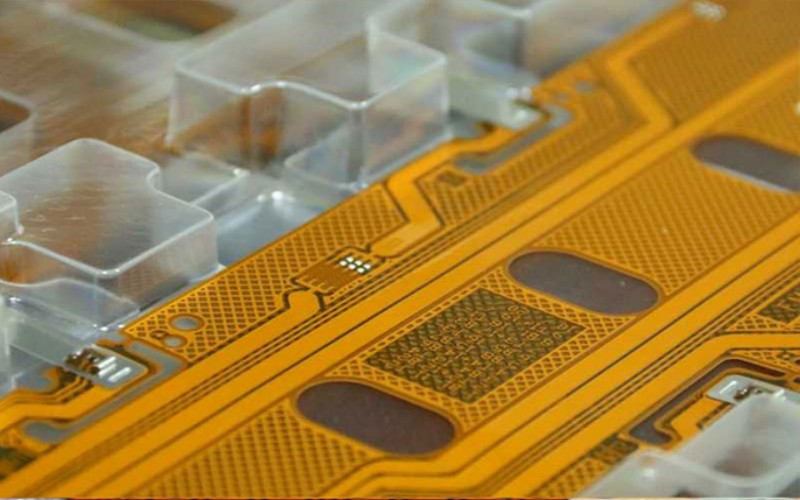
Common symptoms of FPC failure
Before touching the cable, match the visible condition to the device behavior. Many FPC faults are intermittent at first, which is why symptoms often change when the cable is moved or slightly pressed.
● The device works only when the cable is bent, repositioned, or held at a certain angle
● A screen flickers, cuts out, or fails completely after repeated opening, closing, or vibration
● Signals disappear sporadically, or power becomes unstable without a clear component failure
● The flexible printed circuit shows visible cracks, burn marks, or a stressed bend point near a hinge or connector
These symptoms matter because they help separate a broken trace from a loose connector, failing component, or unrelated board-level issue. A careful diagnosis saves time and prevents unnecessary damage during repair.
When replacing the FPC is better than repairing it
Situation | Best decision | Why |
Multiple broken traces in a fine-pitch area | Replace | Alignment and isolation become too difficult for stable rework |
Severe delamination or badly torn substrate | Replace | The base material may no longer support a durable electrical repair |
Damage inside or very near dense connector ends | Usually replace | Access is limited and misalignment risk is high |
High-speed signal paths | Usually replace | Even a visually successful repair may affect signal integrity |
This decision matters because flexible printed circuit repair is not only about restoring continuity. The fix also has to survive handling and work reliably in the real product. When structure, spacing, or signal sensitivity leave little margin, replacement is the safer path.
Tools and Preparation for Safe Flexible Printed Circuit Repair
Basic tools needed for FPC repair
Before any repair starts, the work area has to support precision rather than speed. A temperature-controlled soldering iron with a very fine tip is essential because FPC traces and pads are small, thin, and easy to overheat. Practical repair work depends on short, controlled contact rather than prolonged soldering. A multimeter matters just as much as the iron, since continuity testing tells you whether the break is real, whether the repair bridged the gap, and whether a nearby short was created during rework.
Magnification, fine tweezers, a precision knife, and flux complete the core setup because most flexible printed circuit faults are too small to inspect or align reliably with the naked eye.
● Fine-tip temperature-controlled soldering iron for delicate pads and traces
● Multimeter for continuity and post-repair verification
● Precision knife or scalpel to uncover copper cleanly
● Tweezers and magnification for alignment and inspection
● Flux to help solder wet the exposed conductor without excess heat
Repair materials for different damage types
Material | Best use case | Main advantage |
Conductive silver paste | Small trace breaks where soldering is risky | No direct heat on the flex base |
Fine jumper wire | Broken traces that need a durable bridge | Stronger electrical connection |
Thin copper foil | Wider conductors or power-carrying lines | Better coverage over a larger gap |
Kapton tape or other insulation | Covering and reinforcing repaired spots | Electrical protection plus strain relief |
Once repaired, a flexible printed circuit section usually becomes less flexible than before, so insulation should also provide mechanical support rather than acting as a simple cover.
How to prepare the damaged area correctly
Preparation is where many FPC repairs succeed or fail. Start by cleaning the damaged area with isopropyl alcohol so oxidation, dirt, and residue do not interfere with the bond. Then expose only enough copper for the repair, trimming back the coating slowly with a sharp blade instead of digging into the conductor. The cable should be held flat and stable before any paste or solder is applied, because movement during heating can lift copper or stretch an already weakened section.
Heat must stay brief and controlled. Too much heat can bubble the base film, separate copper from the substrate, or trigger delamination during patching. Good preparation reduces the need for force later in the process.
How to Repair Flexible Printed Circuit Damage Step by Step
Once you have confirmed that the fault is actually in the flexible printed circuit rather than the connector or a nearby component, the repair should follow a strict order: inspect the break under magnification, clean the area, expose only the copper you need, complete the electrical bridge, insulate it, and then verify continuity before reinstalling the cable. FPC repair is less about aggressive soldering and more about controlled, localized work on a very thin polyimide base with fragile copper traces.
Repair method | Best use case | Main watch-out |
Conductive paste | Very small, simple trace breaks where soldering may cause more damage | Full cure time is required before testing or insulation |
Fine wire bridge | Breaks that need a stronger and more reliable electrical connection | Excess heat or a long wire path can weaken the repair |
Copper foil patch | Wider traces or power-carrying conductors | Poor alignment or excess foil can create shorts |
Method 1: Use conductive paste for a small trace break
Conductive paste is usually the safest choice when the break is narrow, exposed, and too delicate for direct soldering. This method works well for simple fractures or extremely fine areas where conventional rework could lift copper or deform the base film. The first step is to clean the damaged spot with high-concentration isopropyl alcohol so oils, dust, and oxidation do not weaken the bond. After that, carefully scrape back the coating on both sides of the crack with a precision blade until clean copper is visible. Only then should the paste be applied, using as little material as possible so it bridges the gap without spreading into neighboring traces.
The curing stage matters as much as the application itself. A paste repair that looks connected can still fail if it is tested too early or covered before it has set fully. Once cured, the repaired section should be insulated with Kapton tape or another thin, stable insulating layer. At that point, a multimeter check is appropriate. This method is practical, but it is still best reserved for light-duty lines or situations where heat would create a greater risk than the original break.
Method 2: Bridge the broken FPC trace with fine wire
A fine wire bridge is the stronger option when the damaged trace must carry current reliably or when the repair needs better long-term continuity than conductive paste can provide. This is often the more durable method, especially for broken traces that can be reached from both sides of the gap. Preparation is still the same in principle: clean the area first, then expose the copper with a sharp blade, taking care not to remove more material than necessary. After that, lightly tin the exposed copper ends with flux and a minimal amount of solder. The goal is not to flood the area, but to create two small anchor points.
The jumper itself should be extremely fine and kept as short as the break allows. A long loop may restore continuity, but it also raises the chance of movement, stress concentration, or signal instability. Keep iron contact time very short, because the flexible printed circuit substrate can bubble, warp, or release copper if heat lingers too long. A good wire repair sits flat, follows the original trace path closely, and is secured after testing so it does not flex independently from the cable.
Method 3: Patch a wider trace with copper foil
Copper foil patching works best when the damaged conductor is wider, such as a power line or another trace with enough physical width to accept a shaped patch. Start by trimming back the damaged coating and exposing the copper, then cut a piece of thin foil that closely matches the original conductor width. Place it over the break with careful alignment. Matching geometry matters almost as much as making the electrical connection, because a foil patch that is too wide or too long can interfere with adjacent conductors or the way the FPC sits in the device.
Once positioned, the foil can be bonded with flux and minimal solder, but pressure and heat both need to stay controlled. After bonding, inspect the patch closely under magnification and trim any excess material that could bridge into nearby traces. This is also the stage where continuity and short-circuit checks become critical. A foil patch may look neat from above while still forming an unwanted bridge at the edge.
What mistakes ruin an FPC repair
Most failed repairs are caused by technique errors rather than by the original damage. The most common repair-killing mistakes include:
● Overheating the flexible base until the film bubbles or the copper starts to lift
● Scraping too deep while exposing the trace and thinning or severing the remaining conductor
● Misaligning wire, foil, or patch material over fine-pitch traces
● Testing only for continuity and forgetting to check for shorts to adjacent lines
● Leaving the repaired section unsupported so it bends again at the same stress point
Every flexible printed circuit repair should be treated as both an electrical and a mechanical fix. Restoring continuity is only half the job. The repaired area must also be protected from repeating the same failure.
Test, Reinforce, and Prevent the Same FPC Failure
How to test the repaired flexible printed circuit
A repaired FPC should never go straight back into the device without staged testing. Start with a continuity check across the repaired path to confirm that the electrical bridge is complete, then test adjacent traces for shorts before any power is applied. A repair can look acceptable under light but still hide excess solder, foil, or conductive residue that could interfere with normal operation. Once the basic readings are correct, perform a gentle movement test by flexing the cable slightly around its normal routing shape. This is important because many flexible printed circuit faults are intermittent and only show up when the cable shifts under real mechanical stress.
After that, reinstall the part temporarily and verify full device behavior rather than relying on meter readings alone.
Test stage | What to verify | Why it matters |
Continuity check | Electrical path is restored across the repaired trace | Confirms the break is actually bridged |
Short-circuit check | Neighboring traces remain isolated | Prevents hidden failures after reassembly |
Gentle flex test | Signal does not cut in and out when the cable moves | Reveals intermittent weakness at the repair site |
Functional device test | The full circuit works in real operating conditions | Confirms the fix survives actual use |
How to reinforce the repaired section
Electrical repair alone is rarely enough, because the repaired spot usually becomes stiffer and less tolerant of repeated bending. Kapton tape works well as both insulation and structural support. A practical reinforcement strategy is to build a small local stiffener so the exact repair point no longer acts like the original flex zone. That can be as simple as layered Kapton or another thin support material, as long as it fits the assembly without forcing the cable into a sharper fold.
The goal is not to make the whole flexible printed circuit rigid. The goal is to move bending stress away from the repaired trace and reduce the chance of another localized fracture.
How to prevent future FPC damage
Most repeat failures come from the same mechanical pattern that caused the first break. Avoid sharp folds, repeated bending at one hinge-like point, and cable routing that turns a smooth curve into a hard angle. Maintain a gentler bend radius rather than forcing the FPC into a tight V-shape. When reinstalling the cable, make sure the path stays smooth near connectors and moving sections, because stress concentrated at those points can quickly reopen a repaired trace or crack a neighboring one.
Conclusion
Successful flexible printed circuit repair starts with finding the exact fault and choosing the safest effective method. The right process is simple: inspect carefully, repair precisely, test fully, and reinforce the weak area. Some fine-pitch or severe damage still needs replacement or expert rework. HECTACH delivers value with reliable flexible printed circuit solutions and professional support that help reduce failure risk and maintenance cost.
FAQ
Q: Can a flexible printed circuit (FPC) be repaired?
A: Yes, a flexible printed circuit (FPC) can be repaired when damage is local, visible, and away from fine-pitch connector ends.
Q: What is the best method to repair a flexible printed circuit (FPC)?
A: The best method for a flexible printed circuit (FPC) depends on trace size: conductive paste for small breaks, fine wire for stronger bridges, and copper foil for wider traces.
Q: When should an FPC be replaced instead of repaired?
A: Replace the flexible printed circuit (FPC) if it has multiple broken traces, severe delamination, or critical high-speed signal damage.


