Many modern devices stay slim by bending their circuits, not their design goals. But what is a flexible printed circuit, and why is FPC so important today? In this article, you will learn how it works, where it is used, and when it makes more sense than a rigid board.
What Is a Flexible Printed Circuit and Why Is It Different?
What a flexible printed circuit really means
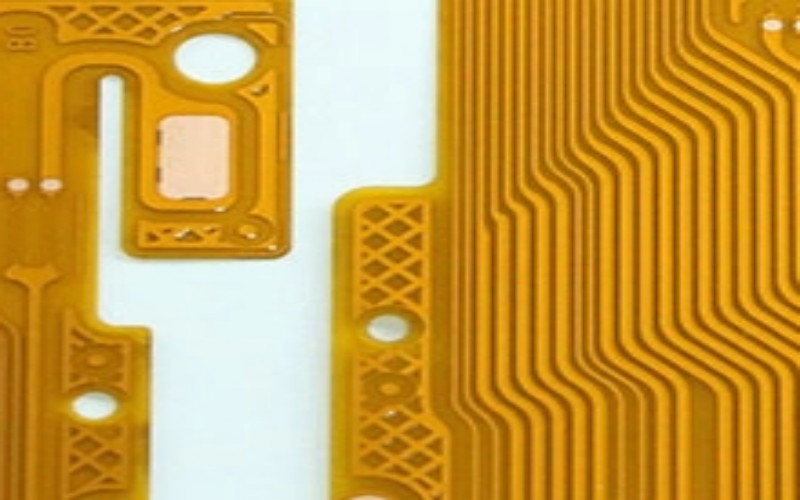
A flexible printed circuit is an electrical circuit formed on a thin, bendable insulating film instead of a rigid fiberglass-based board. In practice, this means the circuit can be shaped to follow the product rather than forcing the product to be built around a flat board. The most common abbreviation is FPC, short for Flexible Printed Circuit, and it is also often called a flex circuit. Unlike a loose bundle of wires, an FPC organizes conductive paths into a compact, engineered layout that can carry signals and power while staying thin and lightweight. This makes it especially useful in products where internal space is limited or the circuit must move with the assembly.
How FPC differs from a rigid PCB
The biggest difference between an FPC and a rigid PCB is mechanical behavior. A rigid board is designed to keep its shape, while an FPC can bend, fold, or route through narrow and uneven spaces without losing its electrical role. That difference changes how products are designed from the inside out: engineers can place parts in separate positions, connect moving sections, or fit electronics into curved housings more efficiently. In many designs, this is not just a convenience but a packaging advantage that helps reduce thickness, simplify routing, and avoid bulky connectors or wire harnesses.
Feature | Flexible Printed Circuit (FPC) | Rigid PCB |
Base structure | Built on bendable film | Built on stiff board material |
Mechanical behavior | Can bend, fold, and fit irregular spaces | Keeps a fixed form |
Design role | Ideal for compact, moving, or space-constrained layouts | Better for stable, flat assemblies |
Why flexible printed circuits are increasingly used
FPC adoption is growing because it solves several design problems at once. It reduces the need for separate wires, connectors, and manual interconnections. It helps make devices smaller and lighter without sacrificing functionality. It also supports layouts that must survive vibration, repeated movement, or tight installation paths. These advantages explain why a flexible printed circuit appears so often in compact consumer electronics, medical devices, automotive assemblies, and other products where efficient use of space matters as much as electrical performance.
How an FPC Is Built: Structure, Materials, and Common Formats
The basic structure of a flexible printed circuit
An FPC is built as a thin layered structure in which each material has a specific job: one layer provides mechanical flexibility, another carries current, and others protect the circuit from handling stress, dust, moisture, and oxidation. Instead of using a thick rigid base, the circuit is formed on a flexible insulating film and then combined with copper and protective materials to create a compact interconnect system that can bend without functioning like a loose cable. In more advanced versions, the same basic construction can be expanded into double-sided, multilayer, or rigid-flex formats when higher routing density or mixed mechanical support is needed.
A typical flexible printed circuit stackup includes these functional elements:
● Flexible substrate: the base film that gives the circuit its bendability and dimensional form
● Copper conductor: the patterned metal layer that carries signals and power
● Protective coverlay: a flexible insulating layer placed over the copper to shield traces while leaving selected pads exposed for soldering
● Bonding material: adhesive or adhesiveless lamination that holds layers together and influences thickness, thermal behavior, and flexibility
● Optional stiffener: a local reinforcement, often added under connectors or component areas that should not flex easily
This structure matters because flexibility alone is not the goal. The substrate must bend without cracking, the copper must keep conductivity under mechanical stress, and the outer protection must prevent environmental or physical damage during assembly and use. In multilayer FPCs, plated holes or vias are also introduced to connect conductive layers, allowing more complex circuit routing in a compact footprint.
Common material choices in FPC design
Material selection strongly affects how an FPC performs in real products. The two most common substrate choices are polyimide and polyester, each suited to different priorities in design and manufacturing. Polyimide is widely used because it combines strong flexibility, high heat resistance, and good chemical stability. Polyester is more cost-sensitive and can work well in less demanding applications, but it does not usually match polyimide in thermal or mechanical robustness.
Material | Typical strength in FPC design | Main trade-off |
Polyimide (PI) | High heat resistance, strong mechanical flexibility, good chemical resistance, better fit for demanding or high-reliability applications | Higher material cost |
Polyester (PET) | Lower cost, useful for less demanding consumer applications, adequate flexibility for simpler designs | Lower thermal performance and reduced robustness compared with PI |
Choosing between them is rarely just a material question; it is a product-level decision. A design that must tolerate higher temperatures, repeated flexing, or harsher operating conditions usually benefits from polyimide, while polyester is more attractive when cost sensitivity is higher and the electrical and mechanical demands are less severe. Bonding systems also matter here, because adhesives can affect thermal limits, peel strength, moisture behavior, and long-term durability in the finished circuit.
Where Flexible Printed Circuits Work Best
A flexible printed circuit delivers the most value when electrical performance has to coexist with tight packaging, movement, or unusual product geometry. It is not limited to one industry. Instead, it appears wherever designers need to reduce bulk, fit electronics into irregular spaces, or improve reliability in environments where conventional wiring becomes harder to manage.
Application area | Why FPC is a strong fit |
Consumer and portable electronics | Supports thin, compact product architecture |
Automotive and industrial systems | Handles vibration, routing constraints, and dense interconnections |
Medical and conformal devices | Enables lightweight, small, body-matching layouts |
Moving assemblies | Replaces bulkier wire-based links in repeated-motion zones |
Consumer and portable electronics
In consumer devices, internal space is limited and every millimeter matters. FPC helps designers connect displays, cameras, batteries, sensors, and control boards without adding the height and stiffness that a rigid board or separate wire assembly would introduce. This is why it appears so often in smartphones, tablets, laptops, smartwatches, and digital cameras. In these products, the benefit is not only flexibility in the physical sense, but also layout freedom: the circuit can pass through hinges, wrap around components, or bridge offset modules inside slim enclosures.
Automotive, industrial, and high-vibration environments
FPC is also well suited to environments where electronics must keep working under vibration, heat, and compact routing conditions. In automotive systems, it can be used in displays, lighting modules, sensors, and control interfaces where multiple parts need dependable interconnection inside crowded assemblies. Industrial equipment benefits for similar reasons. A flexible printed circuit can be easier to route through constrained mechanical spaces than a traditional cable bundle, and when properly designed, it offers stable performance in equipment exposed to movement or repeated mechanical stress.
Medical and body-conforming devices
Medical products often require electronics that are small, light, and able to fit curved or limited spaces. FPC supports this need in wearables, implantable systems, portable monitors, and compact sensing devices. Because the circuit itself can conform more naturally to the product shape, designers can create devices that feel less bulky while maintaining signal paths and component integration. This makes FPC especially useful where comfort, miniaturization, and reliable operation must exist together.
Dynamic applications where wires are less ideal
Some applications involve repeated motion, which is where FPC can outperform more traditional interconnect methods. Typical examples include printer heads, foldable mechanisms, hinged electronics, and assemblies with parts that shift during use. In these cases, a flexible printed circuit can replace multiple wires and connectors with a single organized interconnect path, reducing assembly complexity and lowering the risk of routing errors. That makes it especially attractive in products where motion is built into the design rather than treated as an exception.
Benefits of Flexible Printed Circuit Technology
Space and weight savings
One of the strongest advantages of flexible printed circuit technology is its ability to reduce both product volume and overall mass without sacrificing electrical function. Because the circuit is built on a thin flexible film rather than a thick rigid board, it can fit into narrow cavities, wrap around components, or pass through spaces that would otherwise require multiple boards or added wiring. This makes FPC especially valuable in compact electronics where internal layout is tightly constrained. Weight reduction also matters in portable, wearable, automotive, and aerospace applications, where every gram affects usability, efficiency, or mechanical load. By combining interconnection and packaging efficiency in one structure, an FPC helps designers make products slimmer and more compact.
Better design freedom and assembly efficiency
FPC does more than save space; it changes how products can be designed and assembled. Since the circuit can bend and route through non-flat paths, engineers gain more freedom to place components in different positions and still maintain an organized electrical connection. This often reduces the need for separate wire harnesses, intermediate connectors, and manual routing steps during assembly. In complex products, that can improve integration and reduce opportunities for wiring mistakes. Instead of treating interconnection as an added mechanical problem, the flexible printed circuit becomes part of the product architecture itself.
A well-designed FPC often improves product development in these ways:
● supports tighter and more efficient internal layouts
● reduces connector count and cable-related bulk
● simplifies assembly by replacing multiple discrete interconnects
● improves packaging options in irregular or three-dimensional spaces
Reliability in motion, vibration, and tight packaging
When designed with proper bend control, material selection, and reinforcement where needed, FPC can offer strong durability in demanding conditions. Its lower mass and flexible form help it tolerate vibration and repeated movement better than more rigid or wire-heavy interconnect approaches in many applications. This is why it performs well in moving assemblies, compact modules, and mechanically stressed environments. The reliability advantage does not come from flexibility alone, but from using that flexibility in a controlled way so the circuit can withstand motion, tight routing, and long-term mechanical stress more effectively.
What to Consider Before Choosing an FPC
The main limitations of flexible printed circuits
An FPC can solve major packaging and interconnection problems, but it is not automatically the best option for every product. One of the first issues is cost. Flexible substrates, thin copper constructions, specialized cover materials, and more delicate production steps generally make FPC more expensive than a standard rigid PCB, especially at the prototype stage or in low production volumes. Fabrication is also less forgiving: thin materials are harder to handle, dimensional stability can be more challenging, and assembly requires tighter control to avoid damage. Repair and rework add another layer of difficulty because protective films may need to be removed and restored, and repeated handling can compromise the circuit more easily than on a rigid board.
Design factors that affect performance and cost
Before selecting FPC, designers need to evaluate not just whether flexibility is useful, but how much flexibility the product actually needs. The cost and performance of a flexible printed circuit are influenced by both electrical requirements and mechanical demands. A simple single-layer design used for static installation is very different from a multilayer circuit that must survive repeated bending in a compact assembly.
Design factor | Why it matters |
Layer count | More layers increase routing capability, but also add manufacturing complexity and cost |
Circuit size and shape | Larger or irregular outlines reduce material efficiency and can make fabrication more expensive |
Bend requirement | Dynamic flexing demands stricter design control than a one-time installation bend |
Material choice | Polyimide, polyester, adhesive systems, and higher-end materials affect heat resistance, durability, and price |
Circuit format | Rigid-flex structures improve integration in some products, but add lamination and processing complexity |
When FPC is the right choice—and when it is not
FPC is usually the right choice when the product has a real mechanical or packaging problem that a rigid board cannot solve efficiently. That includes designs with tight internal space, moving sections, curved geometry, weight-sensitive construction, or a need to replace bulky wire harnesses with a more integrated connection system. In those cases, the higher initial cost may be justified by smaller size, fewer connectors, improved assembly flow, or better reliability in motion and vibration.
A standard rigid PCB may be the better choice when:
● the layout is simple and flat
● the circuit does not need to bend after installation
● cost control matters more than packaging flexibility
● repairability and easier handling are higher priorities
The practical decision is not whether FPC is more advanced, but whether its flexibility solves a necessary design problem strongly enough to outweigh the added material, fabrication, and engineering demands.
Conclusion
A flexible printed circuit, or FPC, is a smart choice for compact, lightweight, and reliable electronic designs. It works best when space, motion, and complex packaging matter more than a simple rigid board. The right choice depends on performance needs and total cost. HECTACH adds value by providing flexible circuit solutions that support efficient integration, dependable performance, and product designs built for modern applications.
FAQ
Q: What is a flexible printed circuit (FPC)?
A: A flexible printed circuit (FPC) is a bendable circuit used where space, weight, or motion limits rigid boards.
Q: When should a business choose a flexible printed circuit (FPC)?
A: Choose a flexible printed circuit (FPC) when products need compact routing, repeated bending, or fewer connectors.
Q: Is FPC always better than a rigid PCB?
A: No. A flexible printed circuit (FPC) adds value only when mechanical flexibility or tighter packaging justifies higher cost.


