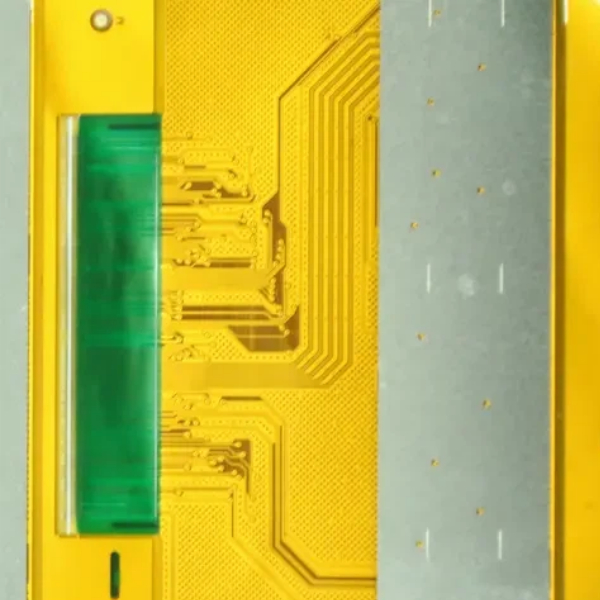
When inspecting a bare flexible circuit board, you might notice bright metallic surfaces. These shiny areas often create a common misconception about the board's outer structure. You might assume plating covers the entire exterior. No, plating is generally not the primary visible layer. The dominant visible layer is actually the coverlay, which is typically a polyimide film. Plating serves as a surface finish and only appears in specific, selectively exposed areas.
Understanding the exact relationship between the copper base, the coverlay, and surface plating is critical for engineers and procurement teams. Specifying the wrong plating material or exposed area can lead to micro-cracking during bending. It can also reduce assembly yield or cause premature field failure. In this guide, we will explore the anatomy of flex circuits. You will learn why plating is applied selectively, how to evaluate surface finish options, and ways to specify plating in your stackup.
Key Takeaways
The primary visible insulating layer on most flexible circuits is the polyimide coverlay, not the plating.
Surface plating (such as ENIG, Hard Gold, or Tin) is selectively applied only to exposed pads, vias, and connector fingers to ensure solderability and prevent oxidation.
Applying plating across dynamic bending areas increases rigidity and the risk of mechanical failure.
Selecting the right surface finish for flexible printed circuit boards requires balancing shelf life, connector compatibility, and assembly temperature constraints.
The FPC Anatomy: Coverlay vs. Surface Plating
To understand what you actually see on a bare flex circuit, you must look at its foundational layers. Each layer serves a distinct mechanical and electrical purpose.
The Base Copper
Manufacturers etch conductive traces from a solid copper foil. You will typically encounter two types of copper. Rolled-annealed (RA) copper features an elongated grain structure. This makes it ideal for dynamic bending. Electro-deposited (ED) copper has a vertical grain structure. It suits static flex applications better. Regardless of the type, bare copper is highly susceptible to oxidation. If left unprotected, environmental moisture and air degrade the copper rapidly. This degrades conductivity and ruins solderability.
The Coverlay (The True Visible Layer)
Because bare copper degrades easily, manufacturers must protect it. They apply a coverlay to shield the traces. The coverlay acts as the flexible equivalent of a rigid board's solder mask. It typically consists of a polyimide (PI) film bonded by an acrylic or epoxy adhesive. When you look at a flex circuit, this polyimide layer is what you primarily see. It covers more than 90% of the board's surface. The coverlay provides critical electrical insulation. It also delivers robust physical protection against scratches, dust, and moisture.
The Surface Plating (The Exposed Metallic Layer)
You cannot solder components directly through the polyimide coverlay. Manufacturers must intentionally open "windows" in the coverlay. They expose the base copper at component pads, Zero Insertion Force (ZIF) connector contacts, and test points. Surface plating is the final chemical or electrolytic finish applied exclusively to these exposed areas. It protects the localized copper from oxidation while ensuring a reliable surface for soldering or mechanical contact. Plating is not a universal coating. It is a highly targeted metallic finish.
Why Plating is Selectively Applied (Engineering & Cost Realities)
You might wonder why we do not simply plate the entire copper layer before applying the coverlay. Applying surface finishes universally across a flexible circuit board introduces severe mechanical and electrical penalties.
Mechanical Flexibility Risks
Plating metals possess different physical properties than base copper. Metals like nickel and gold are inherently brittle. Rolled-annealed copper flexes beautifully. Nickel fractures under the same stress. If you plate full trace runs, you destroy the board's dynamic bend radius. When you bend a fully plated trace, the stiff nickel underlayer cracks. These micro-cracks propagate down into the copper base. Eventually, the trace breaks completely, leading to catastrophic open circuits.
Cost Efficiency
Precious metals drive surface finish expenses. Processes like ENIG (Electroless Nickel Immersion Gold) or Hard Gold use costly elements. Palladium and gold carry high raw material costs. Selective plating restricts these expensive metals only to functional contact points. By keeping plating localized to pads and connector fingers, you optimize manufacturing expenses. Applying gold across non-functional trace areas wastes capital.
Signal Integrity & Impedance
Continuous plating alters the physical dimensions of your conductive traces. This disrupts controlled impedance designs. When you apply plating everywhere, three variables change unpredictably:
Trace Thickness: Plating adds vertical height to the copper line.
Trace Geometry: Chemical plating can alter the cross-sectional shape of the trace.
Dielectric Distance: The gap between the trace surface and the reference plane shifts.
By confining plating to component pads, your high-speed signal traces remain uniform. They retain the exact copper dimensions defined during the initial etching process.
Evaluating Surface Plating Options for Flexible Printed Circuit Boards
Not all surface finishes serve the same purpose. You must select a finish based on your assembly environment, shelf life needs, and mechanical interfaces.
Electroless Nickel Immersion Gold (ENIG)
ENIG is one of the most popular finishes in the industry. It deposits a layer of nickel over the copper, followed by a thin layer of immersion gold.
Best for: Fine-pitch components, flat surfaces, and reliable solderability. The gold prevents oxidation, while the nickel acts as a barrier layer.
Limitations: The nickel underlayer is rigid. You must strictly keep ENIG out of bend zones. If the coverlay opening extends into a folding area, the nickel will fracture during bending.
Hard Gold
Hard gold utilizes an electrolytic process to deposit a thicker, harder gold alloy. It contains trace elements like cobalt to increase durability.
Best for: ZIF connector fingers, sliding contacts, and areas requiring high physical wear resistance. It survives hundreds of insertion cycles.
Limitations: It is expensive and extremely brittle. You need specific design rules to ensure the bend area remains physically separated from the hard gold fingers.
Immersion Tin & Immersion Silver
These finishes deposit a thin layer of tin or silver directly onto the exposed copper pads.
Best for: High-volume, cost-sensitive applications. They offer excellent planar surfaces for fine-pitch soldering.
Limitations: They suffer from short shelf lives. Both are susceptible to handling damage and tarnishing. You must store them in highly controlled, vacuum-sealed environments prior to assembly.
Organic Solderability Preservative (OSP)
OSP is a water-based organic compound. It bonds selectively to copper, forming a microscopic protective layer.
Best for: Very low-cost, lead-free soldering. It keeps pads perfectly flat without adding any metallic thickness.
Limitations: It offers zero protection against physical wear. OSP degrades rapidly after the first thermal cycle. It is poorly suited for multi-pass reflow assemblies.
Surface Finish Comparison Chart
Finish Type
Primary Benefit
Major Limitation
Best Application
ENIG
Excellent planar surface, long shelf life
Rigid nickel causes cracking in bend zones
High-density SMT component pads
Hard Gold
Superior wear resistance
High cost, highly brittle
ZIF connector fingers, sliding contacts
Immersion Tin/Silver
Cost-effective, flat surface
Tarnishes easily, strict storage needed
High-volume, short shelf-life builds
OSP
Lowest cost, adds no thickness
Degrades after one reflow cycle
Single-sided simple SMT assembly
Through-Hole Plating (PTH) vs. Surface Finish Plating
Engineers often confuse surface plating with through-hole plating. While both involve depositing metal, they serve entirely different structural roles in a flexible printed circuit boards design.
Differentiating the Two Processes
Structural plating connects different layers of the board. Manufacturers deposit copper inside drilled via holes. This establishes electrical continuity between the top and bottom layers. We call this Plated Through-Hole (PTH) technology. Surface protective plating is different. It is the final finish applied over the pads and PTH annular rings to protect the copper from oxidation. PTH builds the circuit structure. Surface finishes protect the interface.
PTH in Flex Boards
Via plating in flexible substrates introduces unique manufacturing challenges. Flex boards rely on acrylic or polyimide adhesives. These adhesives exhibit a high Coefficient of Thermal Expansion (CTE). During assembly reflow, the board heats up. The adhesives expand rapidly along the Z-axis. This expansion pulls on the copper barrel inside the via hole. If the copper plating is too thin, the barrel ruptures. Managing this Z-axis stress requires highly controlled electrolytic copper deposition.
Design Rule Check (DRC) Best Practices
You must carefully position vias to prevent plated-hole fracture. Follow these specific rules during your layout:
Avoid Bend Zones: Never place vias in dynamic or static bend areas. Bending stresses the rigid copper barrel, causing immediate failure.
Utilize Rigidized Sections: Place vias in areas supported by stiffeners whenever possible. Stiffeners restrict movement and protect the PTH integrity.
Increase Annular Rings: Flex materials shrink and stretch during manufacturing. Use larger annular rings to compensate for registration shifts between layers.
Specification and Procurement: How to Define Plating in Your Stackup
You cannot leave plating decisions to chance. Ambiguous manufacturing files lead to poor assembly yields. You must define surface finishes and coverlay openings explicitly in your fabrication notes.
Defining Coverlay Openings
You must specify proper tolerances for coverlay registration. The coverlay is drilled, punched, or laser-cut before being laminated onto the board. Sometimes, alignment shifts occur. If the coverlay overlaps the component pad excessively, it creates a mask. Plating chemicals cannot reach the trapped copper. This results in "skip plating." Without plating, the bare copper oxidizes. During assembly, solder refuses to wet to the oxidized copper, creating defective joints. Always design coverlay openings larger than the underlying copper pad. A standard clearance is typically 0.05mm to 0.10mm per side.
Aligning Finish with Assembly Strategy
Your chosen finish must match your Contract Manufacturer's (CM) capabilities. Before finalizing the stackup, verify their reflow profiles. If your CM uses multiple aggressive thermal cycles, OSP will fail. The organic layer burns off during the first pass. Subsequent passes will expose bare copper to oxidation. In multi-pass scenarios, ENIG is far more resilient. Additionally, ensure the finish is compatible with the flux types used in their wave or selective soldering machines.
Compliance and Vendor Verification
When selecting a manufacturer, evaluate their compliance with industry standards. You should look for strict adherence to IPC-6013 capabilities. This standard governs the qualification and performance specifications for flexible printed wiring. Ask specific questions about their chemical controls.
For example, verify their control over nickel thickness in ENIG processes. If a vendor poorly manages the gold immersion bath, it can cause hyper-corrosion of the underlying nickel. We call this "black pad" syndrome. In flex applications, black pad leads to catastrophic brittle solder joint fractures. A trustworthy vendor will provide cross-sectional micro-section reports proving their plating thickness remains within tight IPC tolerances.
Conclusion
Plating is a functional, highly localized layer designed purely for connectivity and soldering. The visible coverlay provides the structural and environmental protection covering the majority of the board. Understanding this distinction helps you make better material choices.
Always finalize your required bend radius, folding areas, and connector types before selecting a surface finish. Keep rigid finishes like ENIG and Hard Gold far away from dynamic stress zones to prevent micro-cracking. Align your plating choices with your manufacturer's thermal profiles to ensure high assembly yields.
Do not guess when it comes to material stackups. Submit your Gerber files and stackup requirements to your manufacturing partner for a comprehensive Design for Manufacturability (DFM) review. A thorough DFM review ensures your plating specifications perfectly match your long-term reliability goals.
FAQ
Q: Can you plate the entire surface of a flexible circuit board?
A: It is technically possible but highly discouraged. Plating metals like nickel and gold are rigid. Coating the entire surface causes extreme loss of flexibility. The board becomes stiff, increasing the risk of severe trace cracking when bent. It also incurs prohibitive material costs without adding functional value.
Q: Why do the connector ends of my flex board look different from the component pads?
A: Different areas serve different functions. Connector ends, known as fingers, typically require Hard Gold. This thick alloy provides excellent durability for repeated insertion cycles into ZIF sockets. Component pads require optimal solderability rather than physical wear resistance, so they usually receive ENIG or OSP finishes.
Q: Does the thickness of the plating affect the bend radius?
A: Yes. Thicker plating significantly restricts the allowable bend radius. Rigid layers, especially thick nickel underlayers in ENIG finishes, cannot stretch like base copper. Heavy plating limits the board to simple "flex-to-install" applications rather than continuous dynamic bending scenarios.