Flexible printed circuit boards look tough because they bend, but they can fail surprisingly easily. A flexible printed circuit, often called an FPC, can be damaged by stress, heat, moisture, or poor handling. In this article, you will learn the main causes, warning signs, and practical ways to prevent failure.
Why Flexible Printed Circuit Boards Fail in Real-World Use
Flexibility has limits
A flexible printed circuit, or FPC, is designed to bend in a controlled way, not to survive sharp folding, forced twisting, or repeated abuse. Once the bend radius becomes too tight, the structure starts concentrating stress in the wrong places. Copper traces may fatigue and crack, adhesive layers can begin to separate, and the base film may lose dimensional stability. That is why an FPC can look intact from the outside while its internal conductive path is already weakened.
The most vulnerable areas are often:
● narrow trace sections near pads
● bend zones close to rigid transition points
● exposed contact fingers and connector ends
Static-use and dynamic-use FPCs do not face the same risks
Some flexible printed circuit boards are bent once during installation and then remain fixed. Others must keep moving throughout product life, such as in hinges, camera modules, or compact consumer devices. Treating a dynamic-use FPC like a static-use part usually leads to early fatigue, intermittent opens, or conductor fracture because the circuit was not built for continuous motion.
Use pattern | Main stress source | Typical failure mode |
Static-use FPC | installation bend | crease damage or trace cracking |
Dynamic-use FPC | repeated motion cycles | metal fatigue and unstable signals |
Small damage can turn into major electrical failure
Early damage is often subtle rather than dramatic. A light scratch through the protective layer, a slight kink near a connector, or local overheating during handling may not stop function immediately. Over time, however, those small defects can grow into open circuits, shorts, contact instability, or heat-related failure during normal operation.
Mechanical and Handling Damage to Flexible Printed Circuit and FPC Assemblies
Over-bending, creasing, and repeated flexing
Mechanical damage is one of the most common reasons a flexible printed circuit fails long before the rest of the product wears out. An FPC is meant to follow a defined bend path, not to be folded like paper, sharply twisted by hand, or flexed again and again outside its design window. When the bend radius becomes too small, strain concentrates in the copper rather than being distributed through the structure. That is when micro-cracks begin to form, adhesive interfaces start to separate, and the conductor can eventually fracture even if the outer surface still looks acceptable. In practice, the damage is often progressive: the circuit may work during assembly, become intermittent during testing, and fail completely only after installation or vibration in service.
Repeated movement creates a different failure pattern from a single bad bend. A static-use FPC that is only supposed to flex once during installation can fail quickly if technicians keep reopening, re-routing, or re-forming it during prototype work. Hard creases are especially risky because they push the copper past its ductility limit, which encourages cracking and delamination rather than simple cosmetic deformation. The same risk appears near rigid-to-flex transition areas, where a sharp bend placed too close to a stiff section can overstress the flexible portion and produce broken conductors or torn material at the edge.
Connector misuse and improper insertion or removal
Connector handling is another major source of avoidable FPC damage, especially in ZIF and similar fine-pitch interfaces. Many failures do not come from field use at all; they happen while the flexible printed circuit is being assembled, inspected, reworked, or removed for troubleshooting. If the latch is not fully opened before insertion, excess force is transferred to the contact end, where the structure is already more vulnerable because protective material has terminated and exposed fingers must make reliable electrical contact. Pulling an FPC out before releasing the connector can scratch the contact surface, kink the tail, or start a tear that later turns into unstable connection behavior.
The connector-related damage patterns below are common during assembly and repair rather than normal product operation.
Handling mistake | What gets damaged first | Likely result |
Forcing insertion into a closed or partly closed connector | contact tail or plated finger area | cracked contacts or intermittent opens |
Pulling instead of unlocking the latch | finger surface and substrate edge | scratched contacts or tearing |
Bending right at the connector exit | copper at the stress point | unstable signal path or open circuit |
Scratching, abrasion, crushing, and accidental impact
An FPC is more adaptable than a rigid board, but it is not resistant to rough treatment. Surface abrasion from tools, trays, housings, or repeated rubbing can wear through the protective cover layer and expose conductive traces underneath. Once that barrier is compromised, the flexible printed circuit becomes more vulnerable to oxidation, shorting, and damage from later handling. Even a small scratch near a narrow trace or pad can become a failure origin when the assembly is bent or heated again.
Physical abuse also includes impact and compression, which are easy to underestimate because the board does not always crack visibly like a rigid PCB. Dropping a part, pinching it during installation, pressing it under a battery or bracket, or trapping it between enclosure features can deform the substrate and damage mounted components at the same time.
Typical high-risk situations include:
● dragging the FPC across sharp housing edges
● pinching it under screws, clips, or stiffeners
● stacking unprotected assemblies during transport
● pressing on populated areas while routing the cable
Environmental Conditions That Can Damage Flexible Printed Circuit Boards
Moisture, humidity, and water exposure
Moisture is one of the most underestimated causes of flexible printed circuit failure because the damage is often delayed rather than immediate. When water or high humidity reaches conductive areas, leakage paths can form between circuits that should remain isolated, which increases the risk of unstable performance or shorting. Over time, moisture also supports corrosion and can create conditions that encourage mold or other contamination in poorly controlled environments. The risk is not limited to field use. Storage, packaging, and pre-assembly handling matter just as much, because an FPC that absorbs moisture in storage may later blister, separate internally, or show delamination when exposed to soldering heat or other thermal processes.
Extreme heat, thermal cycling, and cold stress
Temperature extremes damage flexible printed circuit boards in different ways depending on whether the stress comes from prolonged heat, repeated cycling, or low-temperature brittleness. Excessive heat can distort the substrate, soften or weaken adhesive bonds, and increase the chance of pad lifting or solder joint failure, especially during assembly, rework, or operation in enclosed devices. Repeated heating and cooling adds another layer of strain because the materials expand and contract at different rates. At the other end of the range, cold conditions can make the structure less forgiving during bending, so an FPC that might survive handling at room temperature may crack when flexed after cold storage or shipment.
Environmental condition | Primary effect on FPC | Typical failure risk |
High humidity or water exposure | insulation breakdown and moisture absorption | leakage, corrosion, short circuits |
Excessive heat | substrate and adhesive degradation | warping, pad lift, solder failure |
Thermal cycling | repeated expansion and contraction | fatigue, separation, intermittent faults |
Low-temperature stress | reduced material flexibility | cracking during bending |
Chemical fumes, dust, and contaminated surroundings
Chemical exposure does not require direct liquid contact to be harmful. Solvents, cleaning agents, and corrosive fumes can gradually attack copper surfaces and degrade bonding materials, especially when electronics are stored near chemical supplies. Dust is less aggressive chemically, but it still creates reliability problems by interfering with heat dissipation and allowing hot spots to build up inside equipment. In some environments, dust can also carry moisture or conductive particles that make electrical behavior less stable.
Poor storage control and unexpected physical threats
Warehouse conditions can quietly shorten FPC life before installation ever begins. Dirty shelves, open packaging, and uncontrolled stock areas expose circuits to contamination and handling damage, while poor pest control introduces another practical threat. Rodents or insects in storage spaces can physically damage flexible materials, turning a usable flexible printed circuit assembly into scrap before it reaches production.
Electrical and Thermal Stress That Shortens FPC Service Life
ESD and electrical overstress
Electrical damage in an FPC is not always dramatic or immediately visible. Electrostatic discharge, or ESD, can strike sensitive components or fine conductive paths in a fraction of a second, leaving behind either a direct failure or a latent defect that appears much later as unstable signals, intermittent shutdowns, or unexplained field returns. That is what makes ESD especially dangerous during assembly and handling: the board may pass an initial check, yet still carry hidden damage. Overvoltage events, surge conditions, and trace overstress create a similar problem. A brief electrical spike can overheat narrow conductors, degrade protective circuitry, or damage connected components that the flexible printed circuit depends on for stable operation.
Soldering heat, rework, and localized overheating
Thermal damage often begins during manufacturing, prototyping, or repair rather than during end use. Flexible printed circuit assemblies do not tolerate excessive soldering heat as well as many rigid assemblies, because the substrate and bonding structure are thinner and more heat-sensitive. If technicians apply too much heat, dwell too long on a joint, or repeat rework several times in the same area, pads can start to lift, adhesive strength may drop, and the FPC base material can distort or blister. Localized overheating is also common when adjacent pins are soldered continuously without allowing heat to spread or dissipate properly.
Stress source | What it damages first | Likely outcome |
ESD event | sensitive components or fine conductive paths | immediate or latent electrical failure |
Voltage surge or overstress | traces and protection-related parts | burnout, instability, or open circuits |
Excessive soldering or rework heat | pads, adhesive bond, base film | pad lift, warping, weakened structure |
Faulty components and heat buildup inside the assembly
Not all FPC damage starts in the circuit itself. A defective component can generate too much heat, draw abnormal current, or fail to shield the circuit from overload, gradually stressing the surrounding flexible printed circuit structure. In compact assemblies, poor heat dissipation makes the problem worse because the temperature rise stays concentrated around the failure point instead of dispersing safely through the system.
Design and Process Mistakes That Make Flexible Printed Circuit Damage More Likely
Poor bend-zone layout and weak transition areas
Many flexible printed circuit failures begin long before the product reaches the user. A common root cause is poor bend-zone planning. When stress-sensitive features are placed in areas that must flex, the circuit is forced to absorb movement where it is least tolerant. Traces routed through tight transition zones, abrupt width changes near pads, or unsupported geometry close to rigid sections can all create concentrated strain. Instead of distributing bending energy smoothly, the design channels it into small areas, which increases the chance of copper fatigue, tearing, or intermittent opens over time. This problem is especially serious in high-movement sections, where even a sound material stack-up can fail if the geometry encourages repeated stress at the same point.
Design or process mistake | Why it raises damage risk | Likely result |
Stress features placed in bend areas | bending force concentrates around weak points | cracked traces or unstable connection |
Poor support at rigid-to-flex transitions | repeated motion loads the edge of the flex section | tearing or conductor fracture |
Unsuitable material stack-up | structure cannot tolerate real heat or motion | premature fatigue or delamination |
Weak assembly control | hidden defects enter the board before use | early-life failure during test or service |
Wrong material selection for the application
Material choice determines whether an FPC survives real use or only performs well on paper. If the substrate is not suited to the bend pattern, if the copper type cannot tolerate repeated motion, or if the adhesive system softens too easily under heat, durability drops quickly. Reinforcement choices matter as well. A design that needs repeated movement, thermal exposure, or dense assembly cannot rely on the same construction assumptions as a lightly flexed cable in a protected enclosure. Choosing materials without matching them to bend frequency, temperature range, and assembly demands often leads to a flexible printed circuit that passes initial inspection but loses reliability in service.
Manufacturing and assembly control problems
Even a good design can be undermined by poor process control. Flexible materials absorb moisture, so if that moisture is not removed before high-temperature assembly, the board becomes more vulnerable to bubbling, separation, or other internal damage during soldering. Inconsistent fabrication quality can also introduce weak adhesion, dimensional instability, or local defects that do not appear until the FPC is bent or heated later. Production handling adds another layer of risk: careless movement through fixtures, repeated touching of contact areas, or unnecessary flexing during assembly can damage the flexible printed circuit before the finished product is even tested.
Why prototype failures happen more often than production failures
Prototype assemblies usually experience more abuse than production units. They are installed, removed, bent, inspected, reworked, and re-routed far more often while teams evaluate fit and function. That repeated manipulation exposes weaknesses that may never appear in stable production, where trained operators follow a fixed installation method and handle the part only once.
Typical prototype-stage stress points include:
● repeated insertion and removal from connectors
● extra bending while checking fit inside the enclosure
● multiple soldering or rework cycles on the same area
● temporary routing choices that do not reflect final assembly conditions
How to Prevent Flexible Printed Circuit Board Damage Before It Starts
Design for actual movement, not ideal conditions
Prevention starts in the design stage, because a flexible printed circuit board will only be as reliable as the movement it was built to survive. The design should reflect how the FPC will actually be bent during installation and use, not how it behaves in a simplified drawing. That means planning around real bend frequency, minimum bend radius, routing path, connector position, and the space available for safe insertion and removal. A circuit that works well in theory can still fail early if the bend is forced too close to a rigid section, if the trace layout creates stress concentration, or if technicians must twist the part just to reach the connector.
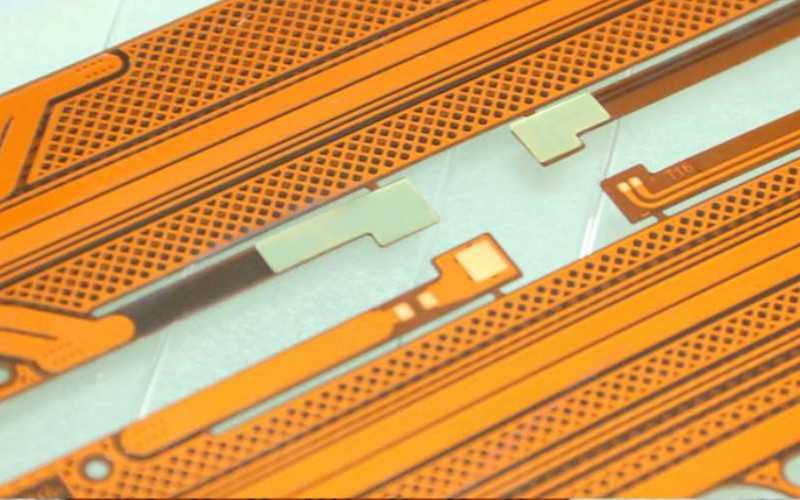
Handle the FPC correctly during assembly and maintenance
Good handling practices prevent many failures that would otherwise be blamed on the board itself. During assembly and service, operators should treat connector ends and exposed contact sections as precision features rather than pull points. Direct pulling on the body of the FPC, forcing it into position, or bending it at the contact tail can create invisible damage that later turns into intermittent faults. The most effective shop-floor rules are usually simple and specific:
Prevention focus | Best practice | Damage avoided |
Connector handling | grip near the connector and release the latch first | torn tails, scratched contacts |
Bend control | keep bending away from rigid transitions and exposed fingers | cracked traces, local fatigue |
Assembly heat | limit rework cycles and avoid prolonged heating in one spot | pad lift, weakened bonding |
Surface protection | keep tools and hard edges away from coverlay surfaces | abrasion, exposed conductors |
Control the storage and operating environment
Environmental control matters before and after installation. Moisture protection in packaging and storage helps prevent absorption that can later cause blistering or delamination during heating, while ESD controls reduce the risk of hidden electrical damage during handling. Clean work areas also matter because dust and chemical contamination can interfere with heat dissipation, degrade surfaces, or reduce long-term reliability. In practice, the safest storage and operating conditions include:
● controlled humidity and sealed packaging when needed
● grounded ESD procedures for operators and workstations
● clean areas free of dust, solvent fumes, and chemical residue
● thermal conditions that avoid overheating during operation or repair
Conclusion
Flexible printed circuit boards are most often damaged by bending abuse, harsh environments, heat, electrical stress, and poor process control. Reliable FPC performance depends on smart design, careful assembly, clean storage, and proper handling over time. HECTACH delivers value through dependable flexible printed circuit solutions, strong manufacturing support, and product quality built for real-world reliability.
FAQ
Q: What most often damages a flexible printed circuit (FPC)?
A: A flexible printed circuit (FPC) is most often damaged by over-bending, heat, moisture, ESD, and poor handling.
Q: Can repeated bending damage an FPC?
A: Yes. A flexible printed circuit (FPC) can develop copper cracks or delamination if flexed beyond its design limit.
Q: Does moisture affect flexible printed circuit reliability?
A: Yes. A flexible printed circuit (FPC) may suffer leakage, corrosion, or soldering-related delamination after moisture exposure.
Q: Are connector mistakes a common FPC failure cause?
A: Yes. A flexible printed circuit (FPC) can fail when contacts are scratched, pulled, or inserted without releasing the latch.


